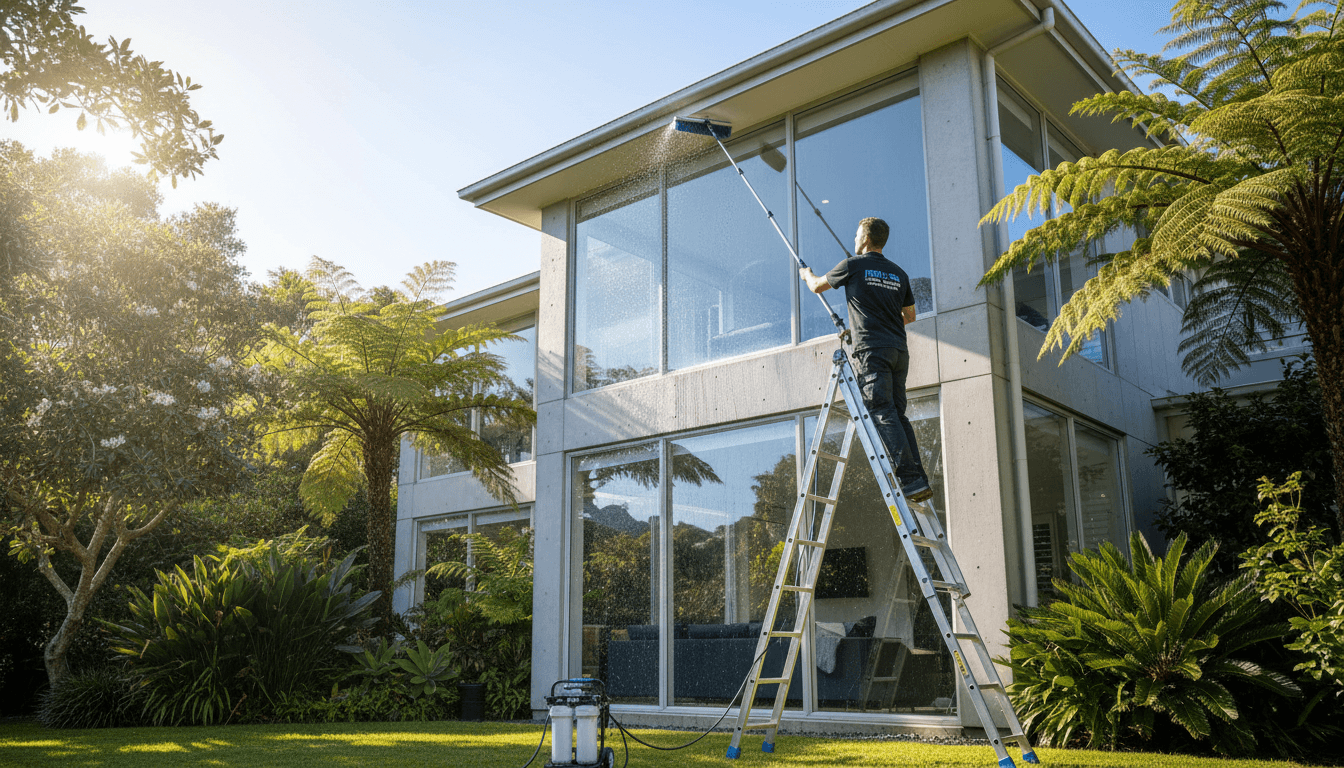
Dirty panels can reduce energy efficiency by up to 25 percent, making regular maintenance essential to maximize your solar panel cleaning ROI Auckland. Professional cleaning every 6 to 12 months removes salt spray and bird droppings that rain misses; this practice ensures peak power output and significantly higher long term savings on electricity bills.
Investing in solar panels is a significant commitment toward energy independence, yet many Auckland homeowners find their projected savings dwindling month after month. It is frustrating to watch your electricity bills climb while your roof remains covered in a layer of grime that you were told the rain would wash away. In our unique coastal climate, the combination of salt spray, Pōhutukawa pollen, and stubborn lichen creates a film that traditional rain simply cannot penetrate. This accumulation acts as a barrier to sunlight, directly impacting your financial return on investment. In this guide, we explore the specific environmental factors affecting Auckland installations and provide a clear calculation of the ROI associated with professional cleaning. You will learn how pure water technology restores peak efficiency and why a small maintenance cost is the key to protecting your solar investment over the long term.
The Hidden Cost of Dirty Solar Panels for Auckland Homeowners
New Zealand’s electricity prices are on a steady upward trajectory, making the initial investment in solar panels a strategic financial move for many Auckland households. Most homeowners install these systems with a clear objective: to slash monthly utility bills and achieve long term energy independence. However, a common mistake is viewing solar as a set and forget asset. This oversight ignores the gradual accumulation of environmental debris that quietly erodes the financial returns on that significant upfront investment.
Understanding the solar panel cleaning ROI Auckland homeowners can expect requires looking beyond the immediate service price. Instead, it is essential to calculate the cost of inaction. When panels are obscured by a fine film of grime, they fail to reach their rated output. Leaving panels unmaintained is not a neutral choice; it is a recurring financial loss. Research indicates that neglected systems can lose up to 25% of their efficiency, forcing you to purchase more expensive power from the grid to make up the shortfall.
Engaging professional exterior cleaning services ensures that your system operates at the peak of its technical potential. By addressing soiling before it becomes a permanent fixture, you protect the long term health of your hardware while securing the precise savings you were promised during installation.
Efficiency Loss: How Much Power Are You Actually Losing?
Industry data consistently shows that soiling, the technical term for dirt accumulation, results in an output drop between 15% and 30%. For many Auckland systems, experts often apply the 20% rule; this guideline suggests that a neglected residential array will lose approximately one-fifth of its generating capacity after a year of exposure. This loss is a direct result of particulate matter blocking photons from reaching the silicon cells. When photons are reflected or absorbed by surface debris instead of the silicon, the chemical reaction required to produce electricity simply never occurs.
The specific types of obstruction encountered in the region create what we call the Auckland grime cocktail. This includes fine dust from ongoing suburban construction, industrial pollution in central areas, and microscopic soot from heavy traffic. Unlike loose dust that might blow away in a light breeze, these particles bond to the glass surface, creating a stubborn film that filters out sunlight.
Soiling Level | Potential Efficiency Loss | Impact on System |
|---|---|---|
Light (Dust and Pollen) | 5% – 10% | Minor reduction in daily peak output |
Moderate (Auckland Grime and Salt) | 15% – 20% | Notable increase in grid power reliance |
Heavy (Lichen and Bird Droppings) | 25% – 30%+ | Risk of permanent cell damage (hot spots) |
Treating maintenance as an aesthetic choice is a fundamental misunderstanding of the hardware. Every percentage point lost to surface debris is a direct hit to your solar panel cleaning ROI Auckland. When panels are obscured, they are not just dirty; they are underperforming assets. Relying on professional exterior cleaning services ensures that the glass remains perfectly transparent, allowing the maximum number of photons to trigger the electrical current your home requires. This technical necessity ensures the system provides the financial returns you expected when you first invested in solar technology.
The Auckland Factor: Salt Spray, Pōhutukawa Pollen, and Lichen
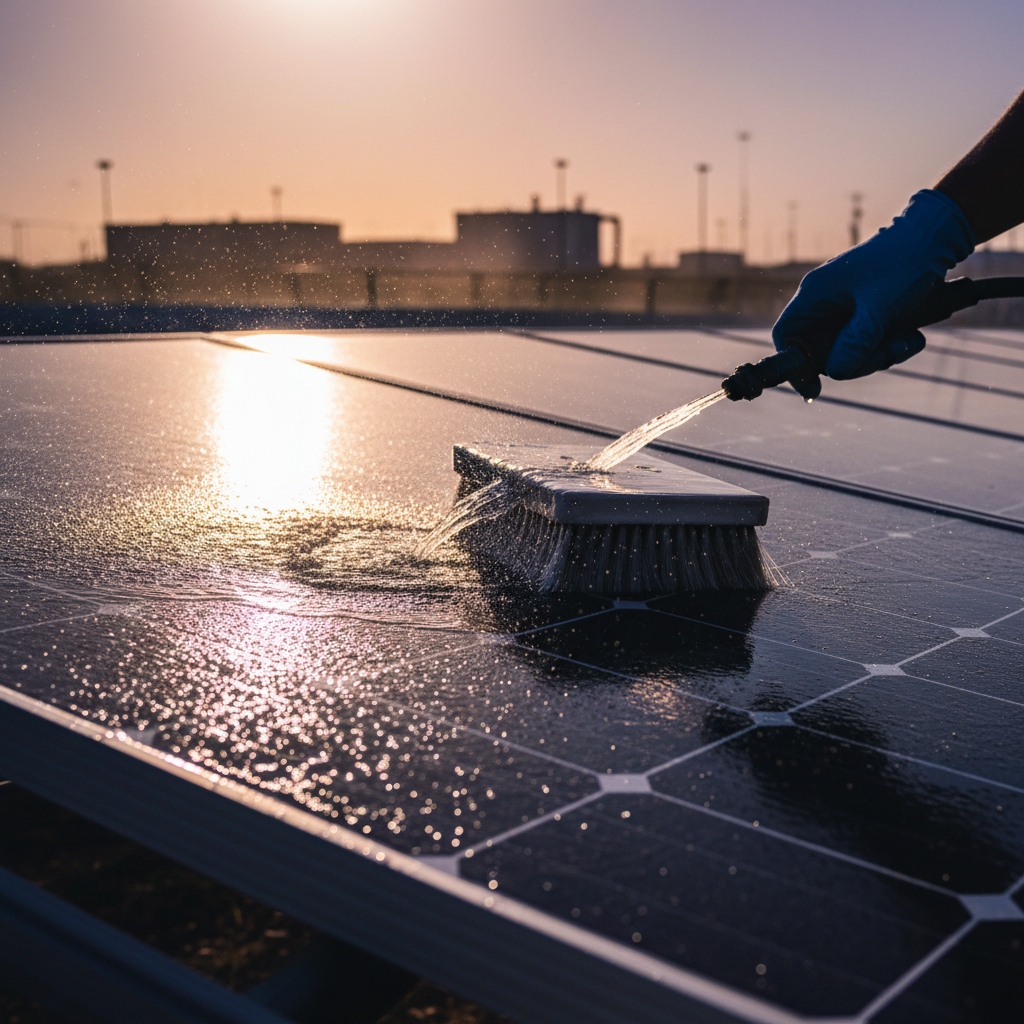
Auckland’s unique geography, being a narrow isthmus surrounded by two harbors, creates a specific set of environmental challenges for solar efficiency. The most persistent of these is coastal salt spray. Unlike dry dust found inland, salt carries moisture and leaves a microscopic, sticky residue upon evaporation. This tacky film acts as an adhesive for other pollutants, causing grime to bond more aggressively to the glass. For homeowners in coastal pockets or elevated areas, this salt layer can significantly dampen the solar panel cleaning ROI Auckland systems are capable of delivering.
Vegetation also plays a major role in leafy suburban areas like Remuera or the North Shore. During spring and early summer, the heavy shedding of Pine and Pōhutukawa pollen creates a thick, yellow coating across rooftops. While this might look superficial, pollen is organic and biological. When mixed with Auckland’s characteristic high humidity, it provides a nutrient base for lichen and algae to take hold. These organisms often begin growing along the bottom edges of the panel frames where water pools, slowly creeping across the glass surface.
Local Environmental Factor | Impact on Solar Panels | Risk Level |
|---|---|---|
Salt Spray | Creates a sticky film that bonds dirt to glass | High (Year-round) |
Pōhutukawa & Pine Pollen | Massive seasonal buildup; feeds biological growth | Medium (Seasonal) |
Lichen & Moss | Physical obstruction and potential glass etching | Critical (Long-term) |
The growth of lichen is particularly concerning because it causes permanent hot spot damage. When a small portion of a cell is shaded by a thick patch of lichen, that cell cannot process the energy flowing through the rest of the string. Instead of producing power, the shaded area begins to consume it, dissipating the energy as heat. This localized heating can eventually crack the glass or damage the internal silicon, leading to hardware failure that no amount of cleaning can fix. Engaging professional exterior cleaning services to remove these biological threats is essential for protecting the physical integrity of your array and maintaining its lifespan.
Calculating the ROI: Is Professional Cleaning Worth the Cost?
To determine the true solar panel cleaning ROI Auckland residents can expect, we must look at the hard data. While it is easy to see the upfront cost of a service, it is much harder to visualize the invisible electricity escaping through a layer of grime. Quantifying this loss requires comparing the cost of maintenance against the actual value of lost power production.
Consider a typical Auckland residential setup: a 5kW system designed to generate approximately 6,000kWh of electricity annually. If that system is subjected to the moderate level of soiling common in suburbs near the Waitematā or Manukau harbors, a 20% efficiency drop is a conservative estimate. This translates to 1,200kWh of lost production. At current New Zealand electricity rates of approximately $0.30 per kWh, that system is costing the owner $360 in lost savings every year.
System Component | Annual Value / Impact |
|---|---|
5kW System Potential Yield | 6,000 kWh |
20% Efficiency Loss from Grime | 1,200 kWh |
Financial Loss (@ $0.30/kWh) | $360 per year |
Average Cost of Professional Clean | $80 – $250 |
Net Financial Benefit (Year 1) | $110 – $280 |
When you compare the $360 loss to the cost of professional exterior cleaning services, which typically ranges from $80 for small arrays to $250 for larger residential systems, the financial logic is undeniable. Even at the higher end of the service price, the clean pays for itself through recovered energy production, often leaving the homeowner with a significant surplus in saved utility costs.
Some homeowners rely on monitoring software or "Solar Analytics" to argue that their systems are performing well enough. However, monitoring data often masks a slow, steady decline that users mistake for seasonal variation or cloud cover. Furthermore, while light rain might move loose dust, it is physically incapable of removing acidic bird droppings or the sticky, crystalline salt spray prevalent in the Auckland region. These specific contaminants create hard shading, which disproportionately impacts the output of the entire string of cells. By removing these stubborn barriers, you are not just cleaning glass; you are actively reclaiming the financial margin of your investment.
Why Auckland Rain Isn't a Substitute for Professional Cleaning
A common misconception among local residents is that our frequent West Coast showers provide a free maintenance service. While it is true that Auckland sees significant annual rainfall, relying on the weather to maintain your system is a mistake that directly undermines your solar panel cleaning ROI Auckland. Think of a rain shower like rinsing a dirty car with a garden hose but never using a sponge. The water might move the loose dust, but it leaves behind a streaky, oily film and does nothing to shift stubborn bird droppings or crystallized salt spray.
In many cases, light rain actually compounds the problem. A brief sunshower often lacks the volume to wash debris away; instead, it turns surface dust into a thin mud. This sludge gravitates toward the bottom edges and corners of the panel frames as it dries. This creates fringe shading where the bottom row of cells is obscured. Because solar cells are typically wired in a series, shading just a small portion of one panel can bottleneck the performance of the entire string. This leads to a disproportionate drop in power output that persistent rainfall will never resolve. Investing in professional exterior cleaning services ensures these localized mud dams are removed, allowing the entire array to function as intended.
The Pure Water Advantage: Maximizing ROI Without Chemicals
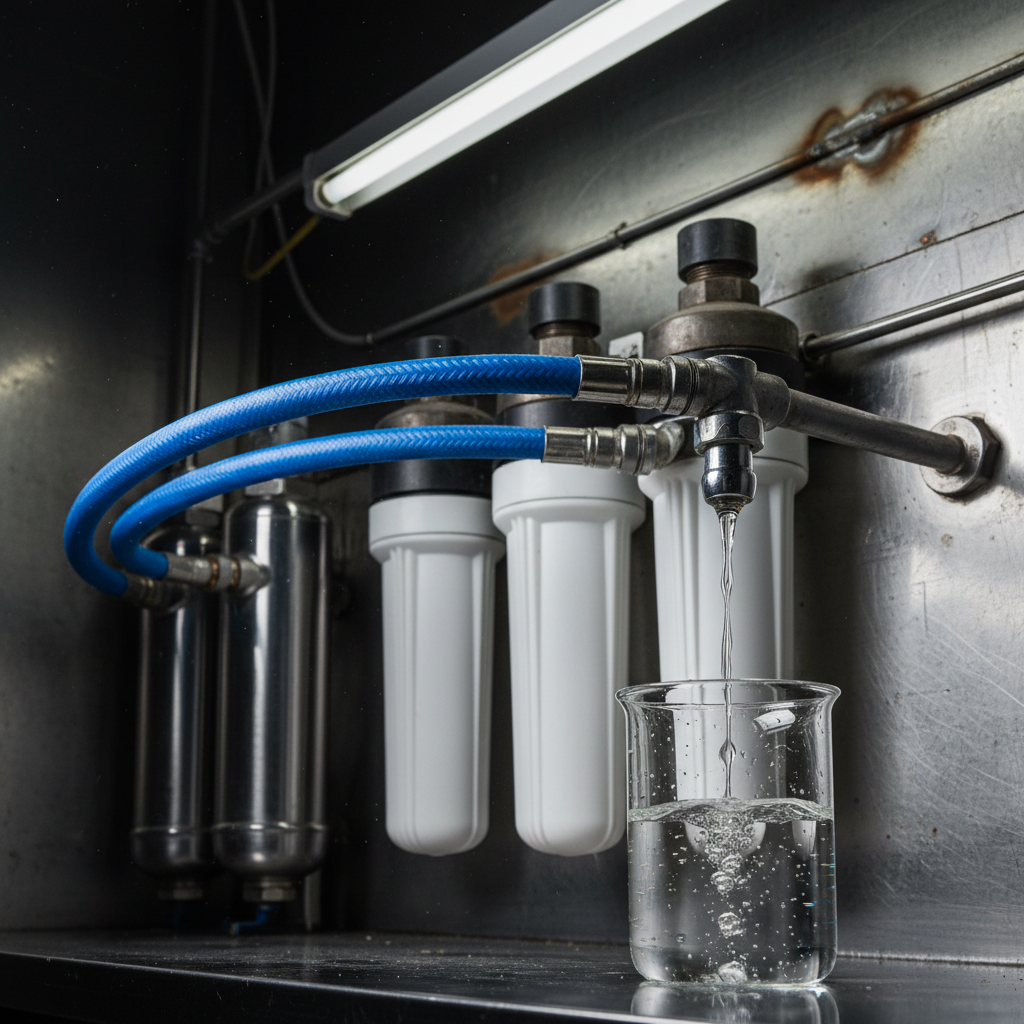
Achieving a high solar panel cleaning ROI Auckland requires a cleaning method that prevents rapid re-soiling. Standard tap water contains various dissolved minerals, often measured as Total Dissolved Solids (TDS). When tap water evaporates on a glass surface, these minerals leave behind white spots or microscopic scaling. These mineral deposits are physically rough and act as an adhesive, attracting dust and salt at an accelerated rate, which quickly negates the benefits of the clean.
EcoExteriors utilizes pure water technology to avoid this cycle. By stripping the water of all mineral content, the liquid acts like a powerful solvent or magnet for dirt. It absorbs surface contaminants without the need for abrasive scrubbing or aggressive detergents. Because the water is entirely devoid of particulates, it dries perfectly clear, ensuring 100% light transparency for your silicon cells.
Cleaning Method | Surface Residue | Re-soiling Rate | Environmental Impact |
|---|---|---|---|
Tap Water | Mineral Spots (TDS) | High (Dirt sticks to spots) | Neutral |
Chemical Cleaners | Oily Film | Medium | High runoff risk |
Pure Water | None (Spot-free) | Low (Slowest accumulation) | 100% Eco-friendly |
This chemical-free approach is a critical consideration for Auckland residential owners concerned about rainwater collection systems or delicate landscaping. There is zero risk of toxic runoff entering your storage tanks or affecting the soil health of your property. To ensure your system remains at peak performance using these sustainable methods, you can contact us for a quote for our professional exterior cleaning services.
Keeping your solar panels free from Auckland's salt spray and dust is more than just a maintenance chore; it is a direct investment in your home’s energy efficiency. While small improvements in output might seem minor at first, they compound into significant savings over the lifespan of your system. If you want expert help to ensure your panels are performing at their peak, you can explore our range of Services to find a solution that fits your needs. Regular care keeps your investment shining bright for years to come.